

Ask for FOB if you have your own freight forwarder, ship regularly, or want to control the schedule and the insurance. Ask for CIF if this is your first container and you want one supplier to arrange the sea freight. Under both terms, the risk in the goods passes to you once they are on board the vessel at Benoa. CIF moves the freight booking to us. It does not move the risk.
Many first-time importers miss this. A CIF price reads like delivery to your port. Legally, it is a price that includes the cost of getting there, with the risk already yours from the moment of loading.
We quote both, from the Port of Benoa in Bali. This guide explains what each one covers, what it leaves out, and how to compare them. For landed cost and the other Incoterms, start with our guide on how to import furniture from Bali.
What FOB and CIF mean under Incoterms 2020
Incoterms are the International Chamber of Commerce’s standard trade terms. The current version is Incoterms 2020. Each term sets out who pays for what, and where the risk passes from seller to buyer.
FOB (Free on Board), Port of Benoa. We make the furniture, pack and crate it, handle export clearance in Indonesia and deliver the goods on board the vessel your forwarder has booked at Benoa. From that point, freight, insurance and everything at the destination are yours.
CIF (Cost, Insurance and Freight), named destination port. We do everything in FOB, and we also book and pay for the sea freight to your named port and take out cargo insurance for your benefit. The price includes those costs. The risk, though, passes at the same point as FOB: on board the vessel at Benoa.
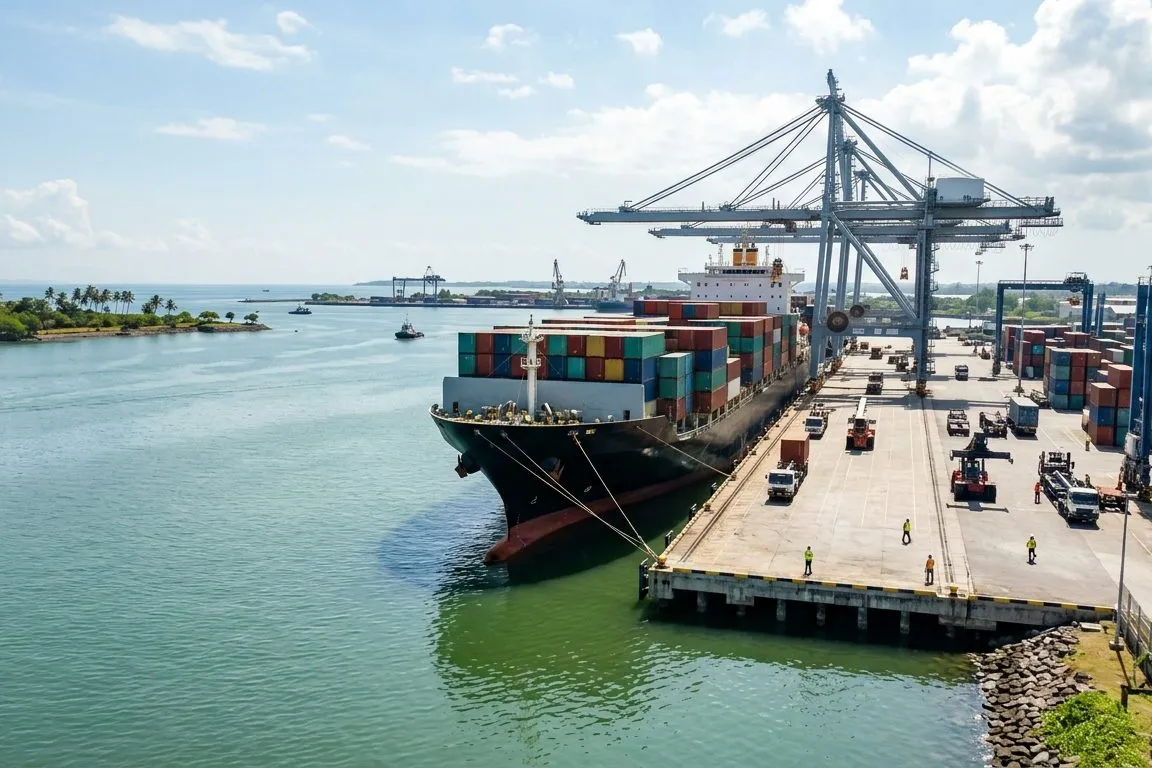
Where the risk passes
Under both terms, the risk of loss or damage moves to the buyer once the goods are on board at the port of loading.
If a crate is dropped on the quay before loading, that is the seller’s problem. If the container is damaged at sea, it is the buyer’s, under FOB and under CIF alike. Under CIF, the buyer then claims on the insurance policy the seller arranged. Under FOB, the buyer claims on the policy they arranged themselves, if they did.
So the question for any FOB buyer is simple: who is insuring the container from Benoa onwards? If the answer is nobody, fix that before the container is loaded.
Who books the freight and controls the schedule
Under FOB, you or your forwarder book the freight. You choose the shipping line, the routing and the sailing. You decide whether to pay more for a faster service or wait for a cheaper one. We work to your forwarder’s booking: the container arrives at the workshop, we load it, and the forwarder takes it from there.
Under CIF, we book the freight. We choose the line and the sailing to your named port. That is simpler for you, but you have less say in the routing, transit time and transhipment ports.
If your delivery date matters, for example a villa handover or a shop opening, think about who you want holding the booking.
What CIF insurance covers
Under Incoterms 2020, the CIF seller only has to buy minimum cover, which means Institute Cargo Clauses (C), for at least 110% of the contract value, unless buyer and seller agree otherwise. Clauses (C) cover major casualties such as fire, sinking, collision and general average. They do not cover many of the things that actually happen to furniture, such as handling damage or water getting into a container.
If you want wider cover, ask for it in writing before you confirm the order, or buy your own top-up policy.
What a CIF price does not include
A CIF price stops at the destination port. It does not include:
- Destination terminal handling charges, usually billed to the buyer by the shipping line or its agent when the container arrives.
- Customs clearance and your broker’s fees.
- Import duty and taxes in your country.
- Inspections, quarantine or biosecurity checks where your authorities require them.
- Port storage and container detention, if clearance is slow.
- Inland delivery from the port to your warehouse or site, and unloading.
None of these are hidden costs. They sit on the buyer’s side of the line under CIF, as they do under FOB. Your customs broker can tell you what applies to furniture in your country. We cannot quote your duty rate.
How to compare an FOB quote and a CIF quote fairly
A CIF price will always look higher than an FOB price for the same goods, because it includes freight and insurance. The fair comparison is not FOB against CIF. It is total cost to your door against total cost to your door.
- Fix the shipment. Same pieces, same quantities, same container size, same ready date.
- Take our FOB price and ask your forwarder for a quote from Benoa to your port, with their insurance and their destination charges listed.
- Take our CIF price and ask your forwarder or broker for the destination charges only: terminal handling, clearance, delivery.
- Add insurance on the same basis. If the CIF cover is clauses (C) and your forwarder quoted clauses (A), you are not comparing like with like.
- Compare the two totals, then weigh the soft factors: who controls the sailing, who you call when something goes wrong, and how fast each side answers.
If you ship part loads, the indicative LCL rates on our shipping cost page give you a starting point. Rates move, so always ask for a current quote.
When FOB suits you
- You already have a freight forwarder you trust, perhaps one who consolidates from several Asian suppliers.
- You ship several containers a year and have negotiated rates.
- You want to choose your own insurer and level of cover.
- You need tight control of sailing dates.
When CIF suits you
- This is your first container from Indonesia.
- You do not yet have a forwarder, or yours has no agent in Bali.
- You want one supplier to coordinate production, loading and the sea leg.
- Your volume is small enough that your own freight rate would not beat ours.
Many buyers start on CIF and move to FOB once they have a forwarder and a rhythm of orders.
A note on FCA and CIP
Incoterms 2020 suggests that FOB and CIF are meant for goods the seller places on board the vessel itself, and that FCA and CIP suit containers handed to a carrier at a terminal before loading. In practice, the furniture trade still quotes FOB and CIF for containers, and most forwarders work with them. If your forwarder prefers FCA, ask us.
Frequently asked questions
Is CIF safer than FOB for a first order?
Not in terms of risk, which passes to you on loading at Benoa under both. CIF is simpler, because one supplier arranges production, freight and insurance. Check the insurance level, and line up a customs broker at your end before the container sails.
Who pays the destination port charges under CIF?
Usually the buyer. A CIF price covers freight to the named port. Terminal handling at destination, clearance, duty, tax and delivery are normally billed to the importer, so ask your broker for an estimate before you compare quotes.
Can I get both an FOB and a CIF quote?
Yes. We quote FOB and CIF from the Port of Benoa. Ask for both on the same enquiry so you can compare them with your forwarder’s numbers.
How long is an FOB or CIF price valid?
Sea freight rates change often, so a CIF price usually has a shorter life than the FOB part of the quote. Ask us for the validity date when we send it.
Ask for your FOB and CIF prices
Send us your product list, specifications or images and your destination port, and say whether you want FOB, CIF or both. We reply within 48 hours. Our minimum is one 20ft or 40ft container, and lead time is 60 to 90 days from order confirmation. The full process, from sample to loading, is on our export and wholesale page, or message us on WhatsApp at +62 878-5115-1097.