
“Antique” is used loosely in Bali. A shop sign can mean a 150-year-old Javanese cabinet, a 1970s teak chair, a reproduction made last year, or a new piece given an antique finish. Each can be a good buy. The price should match which one it is.
Before you pay for age, check four things: what kind of piece it is, what the wood itself tells you about age, where it came from, and what has been restored. If you plan to take it out of Indonesia, check the paperwork too.
We source and restore antiques for collectors and interiors, from Bali, Java, Kalimantan and Nusa Tenggara. This guide is what we would want any buyer to know first.
Four words, four different things
Antique. In the trade, usually a piece around a hundred years old or more. In practice, few sellers can prove an exact date, so treat any age claim as an estimate and ask what it is based on.
Vintage. Old, but not that old. Many teak pieces from the mid twentieth century fall here. They can be well made and full of character, and they should cost less than true antiques.
Reproduction. A new piece made in an old style. In Indonesia you will often hear “repro”. A good reproduction is honest furniture. It becomes a problem only when it is sold as old.
Antique-style finish. A new piece finished to look aged. We offer an antique finish ourselves, on new furniture made to order. It is a look, and it is priced as new work.
None of these is better than the others. What matters is that the description and the price agree.
For general advice on buying antiques anywhere, from research to negotiation, see our seven top tips for buying antiques. The rest of this guide is specific to Indonesian pieces.
Reading age in teak
Much Indonesian antique furniture is teak. Old teak leaves clues. No single clue proves age, but several together tell a story.
Wear in the right places
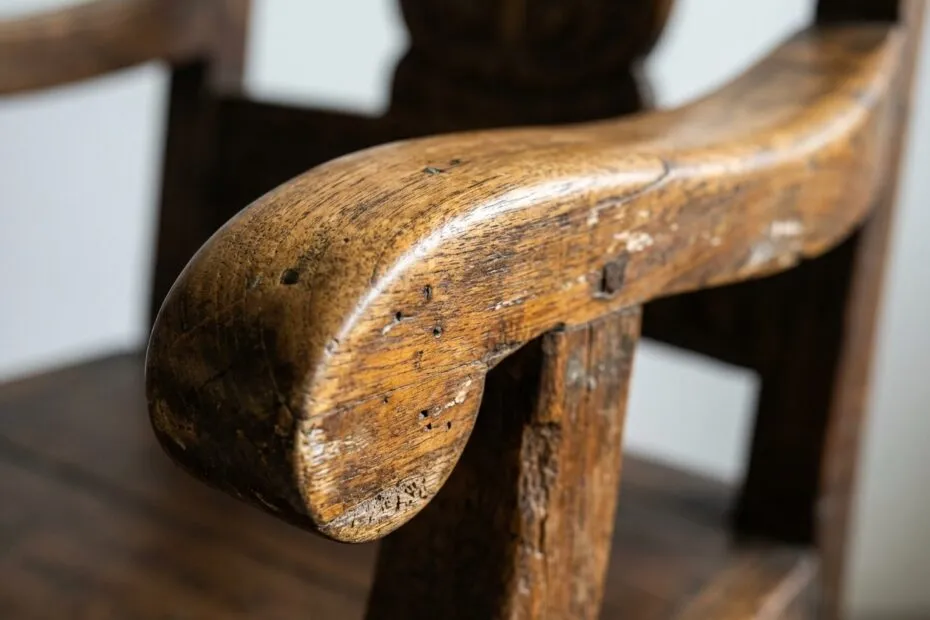
Decades of use wear wood where hands, feet and objects touch it. Look at chair arms, the front edge of a tabletop, the bottom rails where feet rest, drawer runners and door edges. Real wear is uneven and follows use. Wear that is even all over, or appears where nobody would touch, is more likely distressing.
Tool marks
Older pieces were often shaped with hand tools. Look under tops, inside carcasses and on the backs of panels. Hand planing and chiselling leave slight ripples and irregular surfaces. Very regular machine marks, such as the curved arcs left by a circular saw, suggest more recent work.
Shrinkage
Wood shrinks across the grain over many years. A round top can become slightly oval. Panels can shrink in their frames and leave a gap at the edge. Old boards can cup. These small distortions are hard to fake convincingly.
Oxidised surfaces
Teak darkens and mellows as its surface oxidises. Compare an exposed surface with a fresh scratch, a drilled hole or the inside of a joint. On an old piece the difference is clear, and the inside of drawers and the underside of tops will have aged too, though less. A dark surface with bright, fresh wood just below it can mean a stain on new timber.
Old repairs
Long-lived furniture gets mended. Look for patched boards, replaced pegs, splints on cracked legs and boards that do not quite match. Honest old repairs are part of a piece’s history and are not a reason to walk away. Ask what was repaired and when.
Hardware
Hinges, locks, handles and nails change over time. Hand-forged nails and worn hinges fit an old piece. Bright new screws in an old hinge, or filled screw holes beside the current hardware, show that something has been replaced.
Where Indonesian antiques come from
Indonesia’s islands each have their own woodworking and decorative traditions, and a piece’s origin affects its style, its timber and its value. We source from:
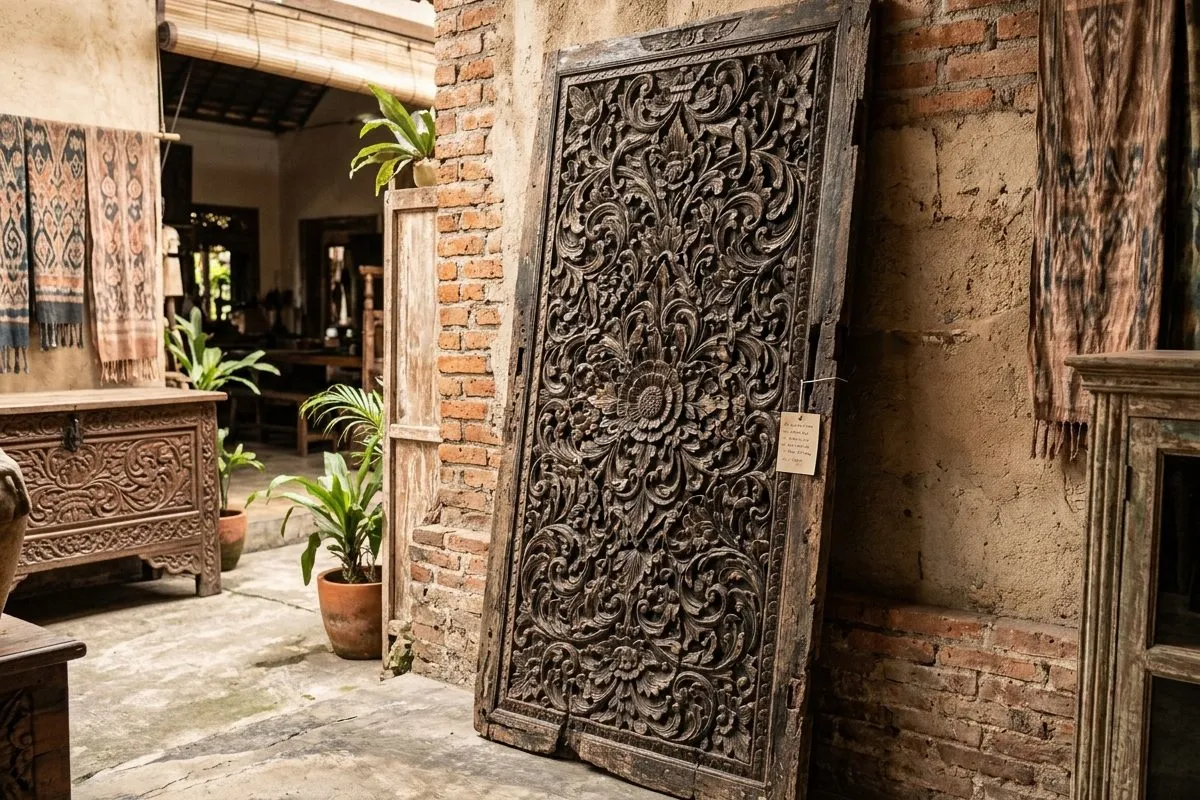
- Java, home of carved panels and the Loro Blonyo statues, the paired figures traditionally placed in Javanese homes.
- Nusa Tenggara, including Sumba, Timor and Lombok. Sumba is known for its ikat textiles and mamuli jewellery.
- Kalimantan, with its own carving traditions.
- Bali, including temple decorations and masks.
Our guide to antiques from Bali and Nusa Tenggara covers these regions and the pieces they produce in more depth.
Questions to ask the seller
How old do you think it is, and why? A good answer refers to the construction, the wear and the origin, not just the word “antique”.
Where is it from? Island and, if known, region.
What has been restored? Ask about structural repairs, replaced parts and replaced hardware.
Is this the original finish? A piece that has been stripped and refinished looks fresher, but may have lost some of its value.
Will you put the description in writing? The age estimate, origin and restoration work belong on the invoice.
Do you have photos from before restoration? These show you what the piece looked like when it was found.
Restored or as found
An antique can be sold as found, conserved or fully refinished.
Conservation means stabilising the piece and cleaning it with as little intervention as possible. Refinishing means stripping the old surface and applying a new one. For collectors, stripping an antique can reduce its value, because the old surface is part of what they are paying for. For an interior, a refinished piece may suit the room better. Decide which you want before you buy.
Our restoration work covers repair, refinishing and rejuvenation of cherished and antique furniture, back to its original condition. We work on solid wood only. For looking after a piece once it is home, see our guide to caring for rare antique collections.
Taking an antique out of Indonesia
Indonesia protects objects of cultural heritage, and some old pieces need clearance before they can be exported. We do not set out the rules here because they depend on the object. Before you pay, ask the seller to confirm in writing what paperwork the piece needs to leave the country and who will arrange it.
Your own country may also have rules for old wooden objects arriving from abroad, including biosecurity checks. Ask your customs broker or the relevant national authority before you buy.
If you are furnishing a project with new pieces as well, ask whether the antiques can travel with them.
Frequently asked questions
How can I tell if a teak piece is really old?
Look for several signs together: uneven wear where hands and feet touch, hand tool marks, shrinkage across the grain, a surface that has oxidised over time and honest old repairs. No single sign proves age. Ask the seller what the age claim is based on.
Is a reproduction a bad buy?
No. A good reproduction is honest furniture, and often costs much less than an original. It is only a problem when it is described or priced as an antique.
Can I take an antique out of Indonesia?
Often, but not always. Indonesia protects cultural heritage objects, and some old pieces need clearance before export. Ask the seller to confirm in writing what paperwork the piece needs before you pay.
Do you restore the antiques you sell?
We source and restore antiques for collectors and interiors. Our restoration covers repair, refinishing and rejuvenation, back to the piece’s original condition. Ask us what has been done to any piece you are considering.
See our antiques in Celuk
Browse the gallery for a sense of the pieces we keep, then visit us at Jl. Setra Cemenggon No.88, Celuk, Sukawati, Monday to Saturday, 9am to 6pm, by appointment. Message us on WhatsApp at +62 812-3842-178 or through our contact page. We reply within 48 hours.