
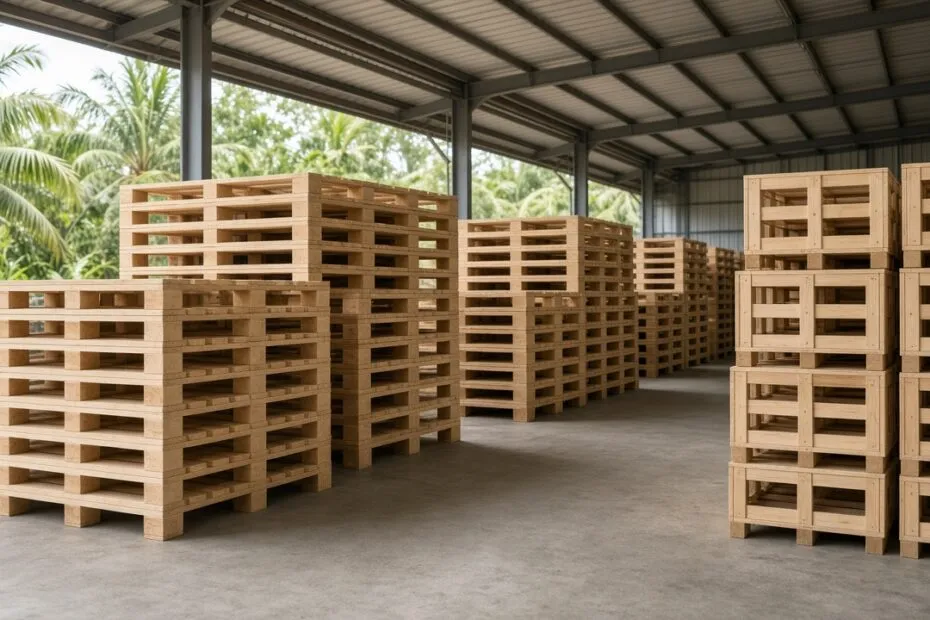
ISPM 15 is the international standard for wooden packaging, such as pallets, crates and bracing, used in export shipments. Raw wood packaging must be treated, usually by heating it to at least 56°C at the core for 30 minutes, and stamped with the official IPPC mark. It applies to the packaging, not to the furniture inside, but packaging that fails can hold up the whole container.
Solid wood furniture travels in wood: crates, skids, pallets and blocks that keep pieces from shifting during weeks at sea. This guide explains what ISPM 15 covers, what the mark on a crate means, which materials are exempt, and what to ask your supplier so your shipment clears without delays.
What ISPM 15 is for
ISPM 15 stands for International Standards for Phytosanitary Measures No. 15. It was adopted under the International Plant Protection Convention (IPPC) to stop insects and plant diseases from travelling across borders inside untreated wooden packaging. Most importing countries, including the EU member states, the United States, Australia, Japan and many others, enforce it at the border.
What it covers, and what it does not
Covered
- Pallets and skids under a piece of furniture.
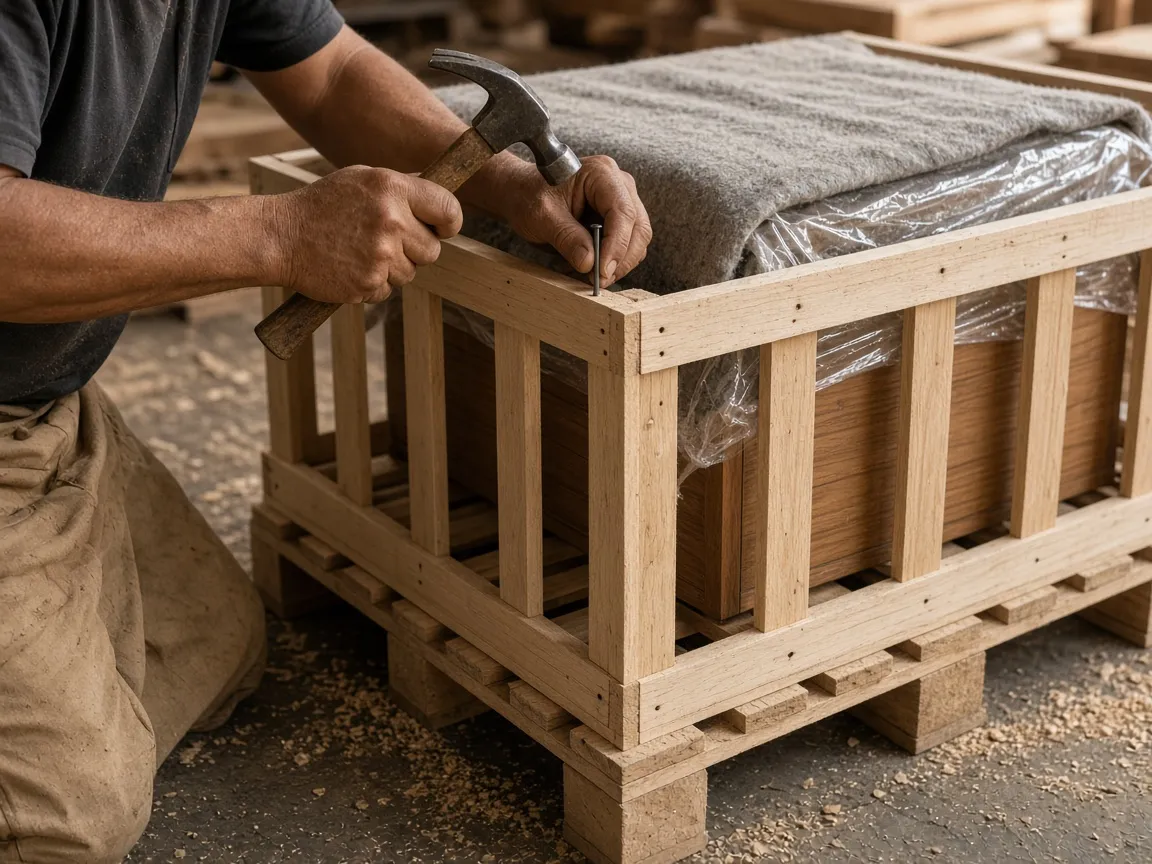
- Crates and slatted cases built around furniture.
- Dunnage, blocks and bracing used to stop a load from moving in the container.
Not covered
- Processed wood such as plywood, particleboard, MDF and OSB, which has already been through heat and pressure.
- Very thin wood, 6 mm thick or less.
- The furniture itself. The furniture is the product, and it is covered by other rules: the phytosanitary certificate, and in some countries an inspection on arrival.
So a teak cabinet crated in pine slats needs ISPM 15 treatment for the pine slats. The cabinet travels with its own export documents. Our export shipments travel with a packing list, a certificate of origin and a phytosanitary certificate.
The treatments
- Heat treatment (HT). The wood is heated until its core reaches at least 56°C for at least 30 continuous minutes. This is the most common method.
- Dielectric heating (DH). A faster method using microwave or radio-frequency heating, with its own temperature requirements.
- Methyl bromide fumigation (MB). A gas treatment that is being phased out and is not accepted by some countries. Ask your broker before accepting it.
Wood packaging should also be debarked. Bark can harbour pests, so inspectors look for it.
Reading the mark
Treated packaging carries a stamp, usually on two opposite sides. It contains:
- the IPPC symbol, a stylised wheat ear;
- the two-letter ISO code of the country where it was treated (ID for Indonesia);
- a unique number for the registered producer or treatment provider;
- the treatment code, such as HT, DH or MB.
A mark that is missing, unreadable or handwritten is a common reason for packaging to be stopped.
What happens if packaging fails
If border officers find untreated or unmarked wood packaging, or live insects in it, the packaging can be treated, removed or destroyed, or the consignment can be re-exported, at the importer’s cost. Even when the furniture is fine, the delay and fees fall on you. That is why it pays to agree packaging standards before production, not at loading.
Other packing questions worth asking
- Wrapping. How is each piece protected from scuffs and moisture inside the crate or container?
- Bracing. How is the load secured so it does not shift at sea?
- Crate or blanket wrap? Crates protect better but take space. Blanket-wrapped pieces fit more into a container. The right mix depends on the pieces and the route.
- Moisture. Long voyages through changing climates can cause condensation. Ask how this is managed.
Our guides to 20ft vs 40ft containers and how to calculate cubication show how packing choices change what fits.
A packing clause for your purchase order
Write the packaging standard into the order, not just the furniture. A short clause is enough: all wooden packaging to be ISPM 15 treated and marked, debarked, and free of insects; each piece wrapped against scuffs and moisture; the load braced so it cannot shift; and photos of the loaded container sent before the doors are sealed. It costs nothing to agree in advance and saves arguments later.
ISPM 15 and your other documents
ISPM 15 is one item on a longer list. Depending on your market you may also need timber legality documents (SVLK and V-Legal from Indonesia), a Lacey Act declaration in the United States, an EUDR due diligence statement in the EU, or biosecurity clearance in Australia. Our guide to legal timber from Indonesia covers the timber side, and how to import furniture from Bali covers costs and terms.
Frequently asked questions
Does ISPM 15 apply to the furniture itself?
No. It applies to wooden packaging such as pallets, crates and bracing. The furniture is covered by other documents and checks.
Is plywood packaging exempt from ISPM 15?
Yes. Processed wood such as plywood, MDF and particleboard is exempt, as is wood 6 mm thick or less.
What does HT mean on a pallet?
Heat treated: the wood core was held at 56°C or more for at least 30 minutes.
What documents come with your export shipments?
A packing list, a certificate of origin and a phytosanitary certificate. We also handle quality inspection, packing and container loading.
Ask about packing for your shipment
Tell us your destination and the pieces you are ordering, and ask us about packing and ISPM 15 packaging for your shipment. We can advise on the documents too. Contact our export and wholesale division or message us on WhatsApp at +62 812-3842-178. We reply within 48 hours.